Skip to content
The fleet

Our training aircraft and simulator

Students here train across three platforms rather than one. Romeo, our glass-cockpit Cessna 172M, is the cornerstone of advanced training. Roxanne, our glass-cockpit Cessna A150M Aerobat, is where stick-and-rudder skills and spin recovery are built, and where cross-country time is affordable. Both meet the FAA definition of a Technically Advanced Aircraft.

The flight line

Two Cessnas, both Technically Advanced.

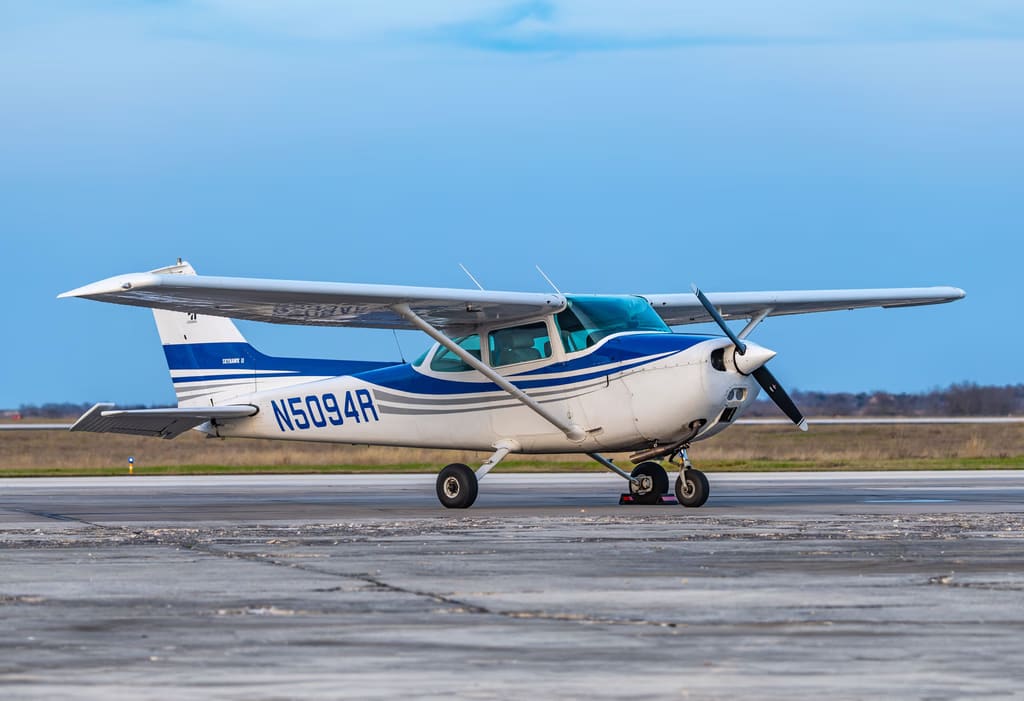
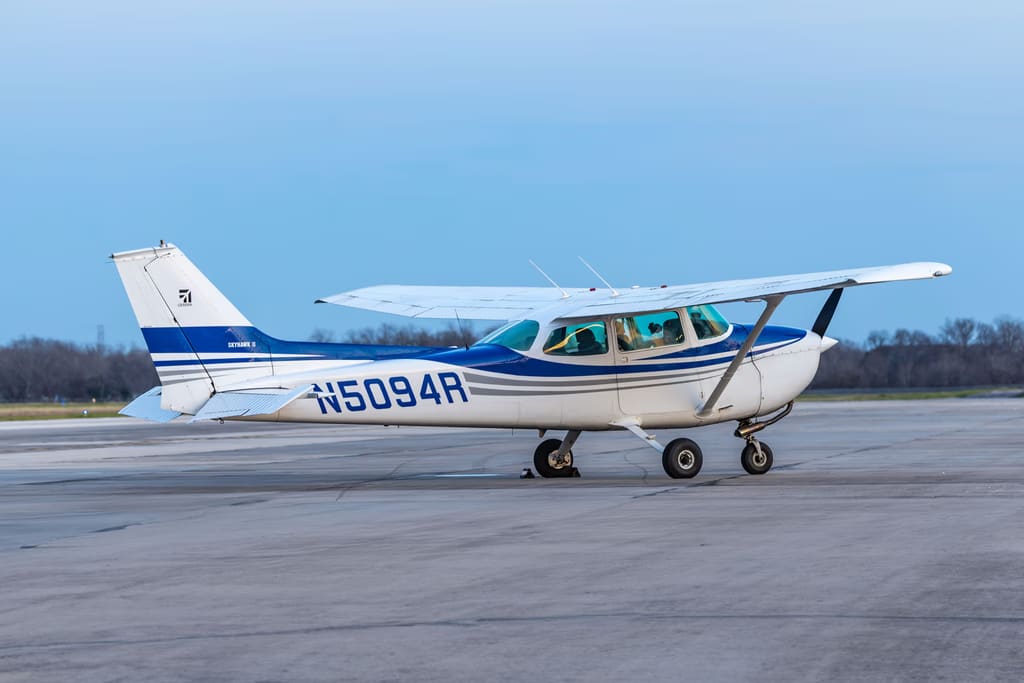
Cessna 172M N5094R in white with blue and gray striping, side-on at the taxiway edge under a clear sky.
N5094R

The advanced-training cornerstone

Cessna 172M “Romeo”

Romeo is our glass-cockpit Cessna 172M and the primary platform for advanced training. The 1974 airframe carries significant upgrades: a Dynon SkyView HDX system coupled with an Avidyne IFD 440 GPS navigator, a Dynon two-axis autopilot with GPS roll steering, and ADS-B In/Out putting traffic and weather on the panel. It meets the FAA definition of a Technically Advanced Aircraft, and ten hours in a TAA or complex aircraft help qualify pilots for the commercial rating. This is where instrument and commercial students integrate everything they have learned — IFR cross-countries, night operations, automation management and checkride preparation.

Registration
N5094R
Year
1974
Seats
4
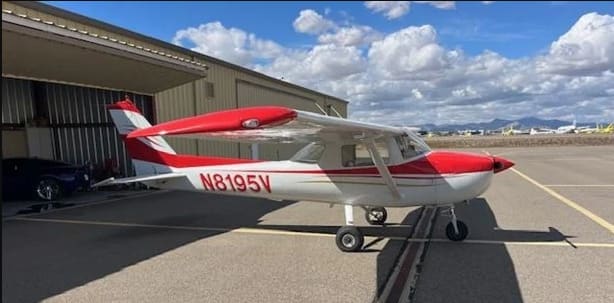
Cessna A150M Aerobat N8195V in white with red trim, parked on the apron beside an open hangar.
N8195V

Spin training and cost-effective time building

Cessna A150M Aerobat “Roxanne”

Roxanne is one of the smallest aircraft in the fleet and one of the most capable. A modern glass cockpit, GPS navigation, moving map and a fully integrated two-axis autopilot give her the same instrument and advanced training capability found in much larger aircraft, at a significantly lower operating cost. Designed as an aerobatic airframe, she is also the aircraft in which students get spin awareness, spin recovery and upset recovery training, and an outstanding platform for the stick-and-rudder skills that separate average pilots from exceptional ones.

Registration
N8195V
Seats
2
The standard

Two glass-cockpit Cessnas and an FAA-approved simulator — because real pilots fly more than one airplane.

Alongside them sits Dexter, an FAA-approved Redbird LD AATD housed in The Flight Lab™, our mobile aviation training center. Dexter can be configured as a traditional six-pack Piper Archer or a glass-cockpit Cessna 172 G1000, costs roughly half as much to operate as a training aircraft, and lets pilots log instrument approaches and maintain IFR currency in accordance with FAA regulations.

The point of training this way is not variety for its own sake. Engine failures, electrical and vacuum failures, instrument malfunctions, deteriorating weather, lost communications and spatial disorientation can be practiced in Dexter until the correct response is automatic — including with live air traffic control simulation for radio work. Students then arrive at each flight lesson better prepared, which makes every paid hour in the airplane count.

  1. Cessna 172M N5094R “Romeo” — Dynon SkyView HDX, Avidyne IFD 440 GPS, two-axis autopilot with GPS roll steering, ADS-B In/Out
  2. Cessna A150M Aerobat N8195V “Roxanne” — glass panel, GPS moving map, two-axis autopilot, certified for spin and upset recovery training
  3. Dexter — an FAA-approved Redbird LD AATD in The Flight Lab™, configurable as a six-pack Piper Archer or a glass Cessna 172 G1000
  4. Both aircraft meet the FAA definition of a Technically Advanced Aircraft (TAA)

See which Smart Path package flies each airframe

About the airframes and how they're maintained

What aircraft will I train in?
Both of ours, plus the simulator. Students fly N5094R “Romeo”, a 1974 glass-cockpit Cessna 172M, and N8195V “Roxanne”, a glass-cockpit Cessna A150M Aerobat — both Technically Advanced Aircraft — and train in Dexter, our FAA-approved Redbird LD. Most schools train you almost entirely in one airplane; we think real pilots fly more than one.
How old are the airplanes, and how are they maintained?
N5094R is a 1974 Cessna 172M, substantially upgraded with an all-glass Dynon SkyView HDX panel, an Avidyne IFD 440 GPS navigator, a two-axis autopilot and ADS-B In/Out. N8195V is a Cessna A150M Aerobat, also glass-panel and TAA-capable. Both are maintained to professional standards and inspected on the schedule the FAA requires of training aircraft.
How many aircraft do you have, and will I always get one?
Two aircraft and an FAA-approved simulator, flown by a team of four instructors, with flight operations running 6am to 10pm seven days a week. We deliberately keep aircraft and instructor availability ahead of demand, so students are not competing for limited slots — which means more consistent flying, fewer interruptions and better skill retention.
Will I train in the same airplane every lesson?
No, and that is the point. Smart Path students learn and practice nearly every major maneuver in both the glass-cockpit Cessna A150M Aerobat and the glass-cockpit Cessna 172, and rehearse emergencies in the Redbird simulator. Pilots who only ever fly one airplane are comfortable in exactly one cockpit; we would rather you were comfortable in more than one.
Do the aircraft have glass cockpits or steam gauges?
Glass — both of them. The Cessna 172 carries a Dynon SkyView HDX panel with an Avidyne IFD 440 GPS navigator, a two-axis autopilot with GPS roll steering and ADS-B In/Out; the Aerobat has a modern glass panel, GPS moving map and integrated two-axis autopilot. Both meet the FAA definition of a Technically Advanced Aircraft. Dexter, our Redbird simulator, can be configured either way: a traditional six-pack Piper Archer or a glass Cessna 172 G1000.

Come see the airplanes

Book a Discovery Flight and take the controls of one yourself — or call 737-256-7305 to talk through your training.

Get My Flight Plan Book — $215